Eye exams
New or existing patient, age, date of last exam, contact lens wearer or not, availability: the request arrives complete. Two kids after school? It asks for back-to-back slots.
Eye exams, glasses ready, contact lenses, RAMQ questions: it answers your patients 24/7, in Quebec French or English, while your optometrists examine. It never gives clinical advice.

Between the exam room and the optical counter, the same calls come in again and again. Zenicall knows them and handles them by your rules, with your clinic’s information.
New or existing patient, age, date of last exam, contact lens wearer or not, availability: the request arrives complete. Two kids after school? It asks for back-to-back slots.
At any hour: in your software once integration is configured, otherwise as a complete request. Patients calling back after your annual exam notice get an answer, and a freed slot is flagged for you.
Coverage by age, emergency exams, the Mieux voir pour réussir program, receipts for insurance: it answers with your clinic’s information, never commenting on a patient’s own case.
“Are my glasses ready?”, contact lens orders, frames to adjust or repair: it answers if the information is available to it, otherwise it notes the request for the right person.
Optometrist, optician or optometric assistant: it routes by your clinic’s services and each person’s schedule.
It understands Quebec French and answers in the patient’s language, even if they switch mid-call.
Every call becomes a clear summary, by email or in your practice management software: who called, why, for whom and what to do next. The transcript and recording stay available, on our servers in Canada.
To do: offer two back-to-back slots after school next week.
These are the calls that matter most, and they often come when the clinic is closed. It routes, the optometrist decides. Here is what happens.
From what the caller describes: sudden vision loss, new flashes or floaters, a chemical or an injury to the eye. It never performs a clinical assessment.
Immediate danger: 911 or the emergency room. A chemical: the Centre antipoison du Québec at 1-800-463-5060. Health advice: Info-Santé at 811. Always per your instructions.
An emergency appointment at the clinic if you offer them, a priority message to the optometrist, a callback at opening or a transfer: you choose, depending on the time.
The phone rings during exams, and many calls are about RAMQ coverage and programs. What official sources say:
1,579
optometrists registered with the professional order in Quebec. During an eye exam, none of them can pick up.
Once
per calendar year: the full exam covered by the RAMQ for people under 18 and 65 or over. Emergency exams are covered for all insured persons with a sudden eye problem.
$300
toward glasses or contact lenses for a child under 18: the Mieux voir pour réussir program. Which means plenty of calls from parents about invoices, receipts and deadlines.
Sources: OOQ, 2024-2025 annual report (members as of March 31, 2025, in French); RAMQ, optometric services; RAMQ, Mieux voir pour réussir (in French)
Karine is an optometrist and owns a neighbourhood clinic. What she loves is the moment a child realizes they can finally read the classroom board. Yet her days often end in front of a list of messages.
Between two exams, she calls back patients whose glasses are ready, explains what the RAMQ covers by age, looks for a slot to refit a contact lens, while the next patient waits with dilated pupils.
She thinks back to the mother who called on a Friday in late August, at 5:45 p.m., with the front desk already closed. She wanted her son’s eyes checked before school started. When the team called back on Monday, she had booked somewhere else.
That evening, facing her voicemail, Karine asked herself: what if every call got an answer, without interrupting an exam?
With these 32 hours freed every month, your clinic could:
Few AI receptionists really speak to optometry in Quebec. Here is what sets us apart, without empty promises.
$200 or $340 a month, minutes included, with the setup fee published too. You know the price before the demo, and you can stop anytime.
No symptom “screening” over the phone. It picks up the words you give it, points to the right line and flags the call for you. Clinical judgment stays with you.
Servers and recordings in Canada, AI providers bound by data processing agreements, PIA available on request. No absolute promises.
Configured during onboarding with your practice management software: Acuitas, Optosys or another.
Compare AI receptionists in Quebec →Zenicall also answers for physiotherapy, chiropractic and other clinics →
Cheaper than a secretary position, more responsive than an automated switchboard.
Your clinic is starting to miss calls and wants to answer them without hiring staff.
You handle high call volume, several practitioners or several clinics.
+ $350 one-time setup fee, paid at go-live (includes deployment, custom configuration and team training)
Tell us how your clinic’s calls are handled today. We set up a receptionist with your clinic’s name, hours and services, and you call it yourself, free of charge.
We reply the next business day. No commitment.
It answers the calls no one can take: during exams, over lunch, in the evening and on weekends. It takes exam requests, changes and cancellations, answers questions about your hours, services and the RAMQ using your information, and notes optical requests. Every call becomes a clear summary for your team.
Yes, once custom integration is configured during onboarding: Acuitas, Optosys or other software. Without integration, it takes a complete request and your team confirms the slot. It never promises a slot that is not free.
No, by design. It makes no diagnosis and gives no advice on a symptom, a prescription, contact lenses or eye drops. Clinical questions are noted for the optometrist, with context, and they call back.
It picks up the words you give it, based on what the caller describes: sudden vision loss, new flashes or floaters, a chemical or an injury to the eye. It routes per your protocol (emergency appointment, 911, emergency room, Centre antipoison, Info-Santé at 811) and flags the call as a priority. It never performs a clinical assessment.
Yes, using your clinic’s information. For example: with participating optometrists, a full exam is covered once per calendar year for people under 18 and 65 or over, and emergency exams are covered for all insured persons with a sudden eye problem, though some additional services may involve fees. It never comments on a patient’s own case: it notes their age and situation for your team.
If order status is available to it once integration is configured, yes. Otherwise, it notes the request, name and number, and the right person calls back. Same for a contact lens order, an adjustment or a frame repair.
Yes, per your instructions: it explains that the program exists for children under 18, that the parent applies to the RAMQ and that your clinic provides a detailed invoice. It never guarantees a reimbursement.
It notes the insurer and, per your instructions, mentions that the clinic provides a receipt. For glasses broken at work, it notes the file number for your team. It never comments on a reimbursement or on whether a claim is eligible.
Your recall notices go out as they do today. When the patient calls back to book, it handles it at any hour: it checks their age and the date of their last exam, then books or passes along a complete request.
Yes. You tell it who does what (exams, contact lenses, eyewear, follow-ups) and each person’s schedule. With several locations, each clinic keeps its own hours, services and number. It routes the request to the right person, or notes it for your team.
Yes. It understands Quebec French and answers in the patient’s language, even if they switch mid-call.
Zenicall is designed for Law 25. Our servers and your recordings are in Canada, and the AI providers that process calls in real time are bound by data processing agreements. A privacy impact assessment (PIA) is available on request. Your clinic remains responsible for its patients’ information; Zenicall acts as a service provider.
No. It takes the calls no one can take: during exams, over lunch, in the evening and on weekends. Your team keeps welcoming the patients in front of them, running the optical counter and making the decisions.
$200 or $340 a month, minutes included, plus a one-time $350 setup fee. No contract: you can stop anytime, with a 30-day money-back guarantee. Setup takes 24 to 48 hours, remotely. Details are in the Pricing section of this page.
It answers the calls no one can take: during exams, over lunch, in the evening and on weekends. It takes exam requests, changes and cancellations, answers questions about your hours, services and the RAMQ using your information, and notes optical requests. Every call becomes a clear summary for your team.
Yes, once custom integration is configured during onboarding: Acuitas, Optosys or other software. Without integration, it takes a complete request and your team confirms the slot. It never promises a slot that is not free.
No, by design. It makes no diagnosis and gives no advice on a symptom, a prescription, contact lenses or eye drops. Clinical questions are noted for the optometrist, with context, and they call back.
It picks up the words you give it, based on what the caller describes: sudden vision loss, new flashes or floaters, a chemical or an injury to the eye. It routes per your protocol (emergency appointment, 911, emergency room, Centre antipoison, Info-Santé at 811) and flags the call as a priority. It never performs a clinical assessment.
Yes, using your clinic’s information. For example: with participating optometrists, a full exam is covered once per calendar year for people under 18 and 65 or over, and emergency exams are covered for all insured persons with a sudden eye problem, though some additional services may involve fees. It never comments on a patient’s own case: it notes their age and situation for your team.
If order status is available to it once integration is configured, yes. Otherwise, it notes the request, name and number, and the right person calls back. Same for a contact lens order, an adjustment or a frame repair.
Yes, per your instructions: it explains that the program exists for children under 18, that the parent applies to the RAMQ and that your clinic provides a detailed invoice. It never guarantees a reimbursement.
It notes the insurer and, per your instructions, mentions that the clinic provides a receipt. For glasses broken at work, it notes the file number for your team. It never comments on a reimbursement or on whether a claim is eligible.
Your recall notices go out as they do today. When the patient calls back to book, it handles it at any hour: it checks their age and the date of their last exam, then books or passes along a complete request.
Yes. You tell it who does what (exams, contact lenses, eyewear, follow-ups) and each person’s schedule. With several locations, each clinic keeps its own hours, services and number. It routes the request to the right person, or notes it for your team.
Yes. It understands Quebec French and answers in the patient’s language, even if they switch mid-call.
Zenicall is designed for Law 25. Our servers and your recordings are in Canada, and the AI providers that process calls in real time are bound by data processing agreements. A privacy impact assessment (PIA) is available on request. Your clinic remains responsible for its patients’ information; Zenicall acts as a service provider.
No. It takes the calls no one can take: during exams, over lunch, in the evening and on weekends. Your team keeps welcoming the patients in front of them, running the optical counter and making the decisions.
$200 or $340 a month, minutes included, plus a one-time $350 setup fee. No contract: you can stop anytime, with a 30-day money-back guarantee. Setup takes 24 to 48 hours, remotely. Details are in the Pricing section of this page.
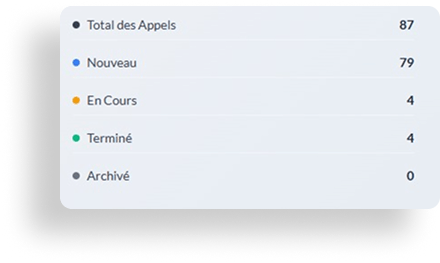
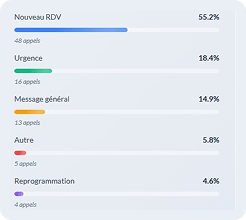
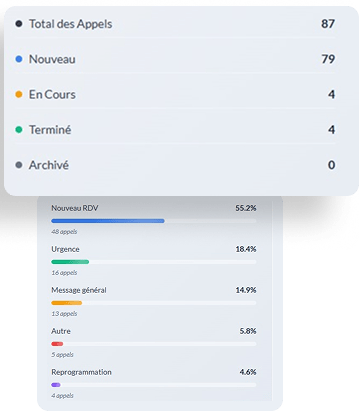
Zenicall is an AI receptionist for businesses and clinics in Quebec. After every call, your team receives a clear summary, by email or directly in your management software: reason, contact details, urgency and next step. An online dashboard with transcripts and statistics is also available on request.